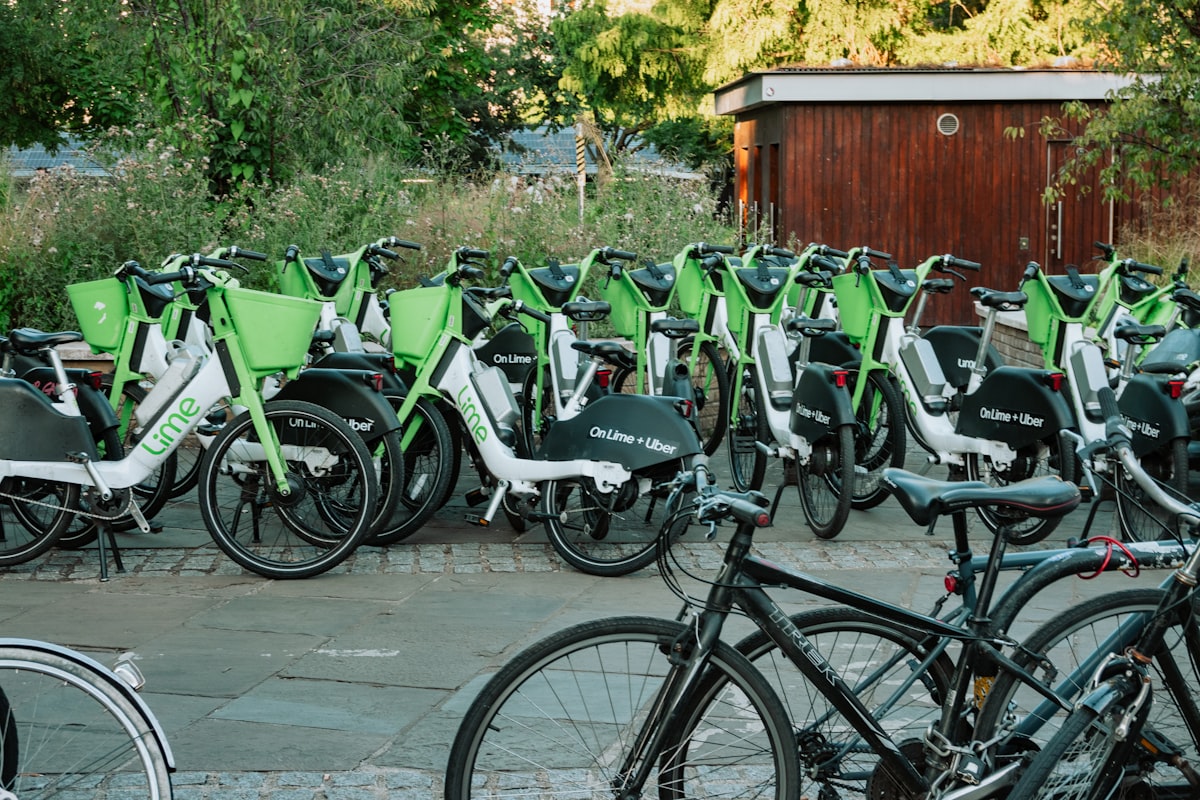
At about 8.30am, you can often tell a Tube line has gone sideways before you check any status page. The giveaway is street-level: a sudden bloom of green e-bikes outside stations, people who do not look like cyclists, and a slightly frantic energy that says, "I'll take anything that moves".
That, in miniature, is the Lime-bike story in London. They are simultaneously a relief valve for a transport system that regularly overheats, and a rolling argument about space, etiquette, regulation, and who gets to leave what on a pavement.
My view, after reading the pricing, the borough politics, and the mood music in the usual online corners, is that dockless e-bikes are a good thing for London. Not an unqualified good, and definitely not "leave them anywhere and shut up about it", but a real, practical improvement to how the city works. The trick is being honest about the trade-offs, and being specific about what should change.
A quick reality check: why they have exploded
When the London Underground breaks down, London doesn't stop travelling. It reroutes. And increasingly, it reroutes onto shared bikes.
During Tube strikes in September 2025, Lime said trips were up sharply in peak periods, and Forest reported big spikes too. Another write-up of the same strike period described a similarly large jump in hires for Santander Cycles as well.
These bikes are not only leisure toys. They have become part of London's contingency plan when lines like the Northern, Central, or District go down.
Transport planners have known this for years. In a TfL analysis of "cyclable" trips, the assumed average cycling speed is 15 km/h, and at that speed a 2 km trip is around 8 minutes, 5 km is around 20 minutes. That is precisely the distance band where the Tube can be weirdly inefficient once you include the walk to the station, the escalators, the wait, the change, and the second walk at the other end.
A lot of London journeys are not "from Zone 4 to the City". They are 1 to 4 km hops between neighbourhoods, often in places where the Tube network is sparse (think south of the Northern line), or where a bus is slow, or where you just cannot face another change at Oxford Circus.
That is the niche Lime has filled: the short, flexible trip that feels too long to walk and too annoying to do by Tube.
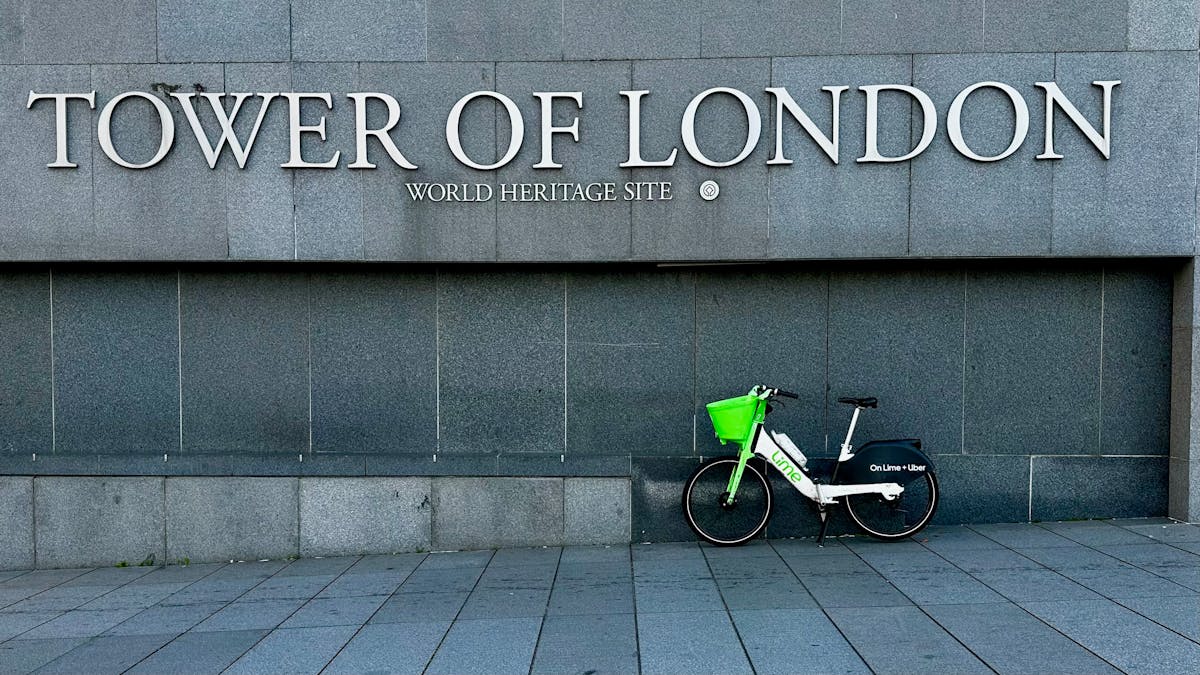
When a Tube line goes down, the green bikes appear faster than replacement buses.
The big divide: the bikes aren't the whole story, the passes are
A surprising amount of criticism boils down to this: people try Lime once on pay-as-you-go, think "this is daylight robbery", and never discover that Lime's pricing only makes sense if you understand its discounts.
Lime's own help docs spell out the structure: there is a fixed unlock cost and a per-minute rate, and those rates can vary by place and time. The key bit is LimePass: Lime sells prepaid minute bundles that include free unlocks and a discounted per-minute rate.
The passes are where the product starts to make sense for regular use, because they drag the effective per-minute cost down, and remove the "one pound every time I touch a bike" feeling.
What people are actually paying (London, late 2025)
Because Lime's exact pay-as-you-go rate varies, it is best to talk in examples that were reported publicly around the late-2025 price changes.
City reporting in November 2025 described a London per-minute increase (from 29p to 31p), alongside the point that Lime now sat noticeably above some rivals on standard rides.
Now compare that with the bundles riders keep referencing in London threads, and which are listed in consumer round-ups:
| LimePass bundle | Price | Validity | Effective per-minute |
|---|---|---|---|
| 30 minutes | £3.99 | 1 day | ~13p |
| 60 minutes | £6.99 | 3 days | ~12p |
| 200 minutes | £18.99 | 7 days | ~9.5p |
| 400 minutes | £36.99 | 30 days | ~9.2p |
Even if you ignore the validity windows, that is roughly 9 to 13p per minute, with free unlocks, versus a standard per-minute rate that can be three times higher.
Put it into one very normal London scenario
Pay-as-you-go
A 20-minute ride can land in "that's basically a minicab" territory once you add an unlock and a high per-minute rate.
~£7.20200-min bundle
The same 20-minute ride, using minutes at ~9.5p each, with no unlock fee.
~£1.90That is why you get this whiplash in forum posts. One rider says they love Lime but "3.99 for 30 mins adds up each time" and they spent "nearly 200 quid" in a month. That is the sound of someone using the product heavily, but not necessarily using the product well.
Lime also sells LimePrime, a recurring monthly membership for free unlocks and longer reservations. It helps most if you do lots of short hops with multiple stops (where unlock fees are the killer).
"But the Tube is cheaper." Sometimes yes, sometimes no.
This is where it gets interesting, and where a London transport alerts site can add real value: the right comparison depends on whether you are already "in the system" that day.
Two facts to hold in your head:
- The bus is cheap and flexible. TfL's Hopper fare is £1.75 for unlimited bus and tram journeys within one hour.
- The Tube has fare capping. In 2026, the daily cap for Zones 1 to 2 pay-as-you-go is £8.90.
So: if you have not travelled yet, and you are making one quick hop, an e-bike bundle can be genuinely competitive with a Tube fare, especially when you factor in time saved and door-to-door convenience.
If you have already hit your daily cap, your marginal cost for another Tube trip is effectively zero (until you leave the capped zone set), so Lime has to compete on time and hassle, not price.
Not "Lime vs Tube", but "given your day so far, and what your alerts are saying, what is the rational move right now?"
Hackney as the test case (and yes, that's personal for us)
The most revealing experiment in London right now is Hackney.
It is also where the Tube Alerter team is based, so it is hard not to watch Hackney's micromobility choices as a preview of what other boroughs might try next.
In late September 2025, Hackney announced five-year contracts with Lime and Voi designed to make dockless e-bikes "the same price as a single bus fare". In practice, the headline was a £1.75 cap for certain journeys in-borough, explicitly pegged to the bus fare.
That sounds brilliant, and in one sense it is: it turns the e-bike into a default option for short trips, not a splurge.
But the details matter, and some of the early framing encouraged the wrong mental model. A monthly fee divided by a very large number of short rides (many of them entirely within one borough) produces an impressively low "per ride" number, but it assumes a volume and a travel pattern that most residents simply do not have. Plenty of people cross borough lines as part of ordinary life. Plenty of people use hire bikes occasionally, not daily. For them, the economics look very different, and the "same as a bus fare" headline can feel like it was written for someone else.
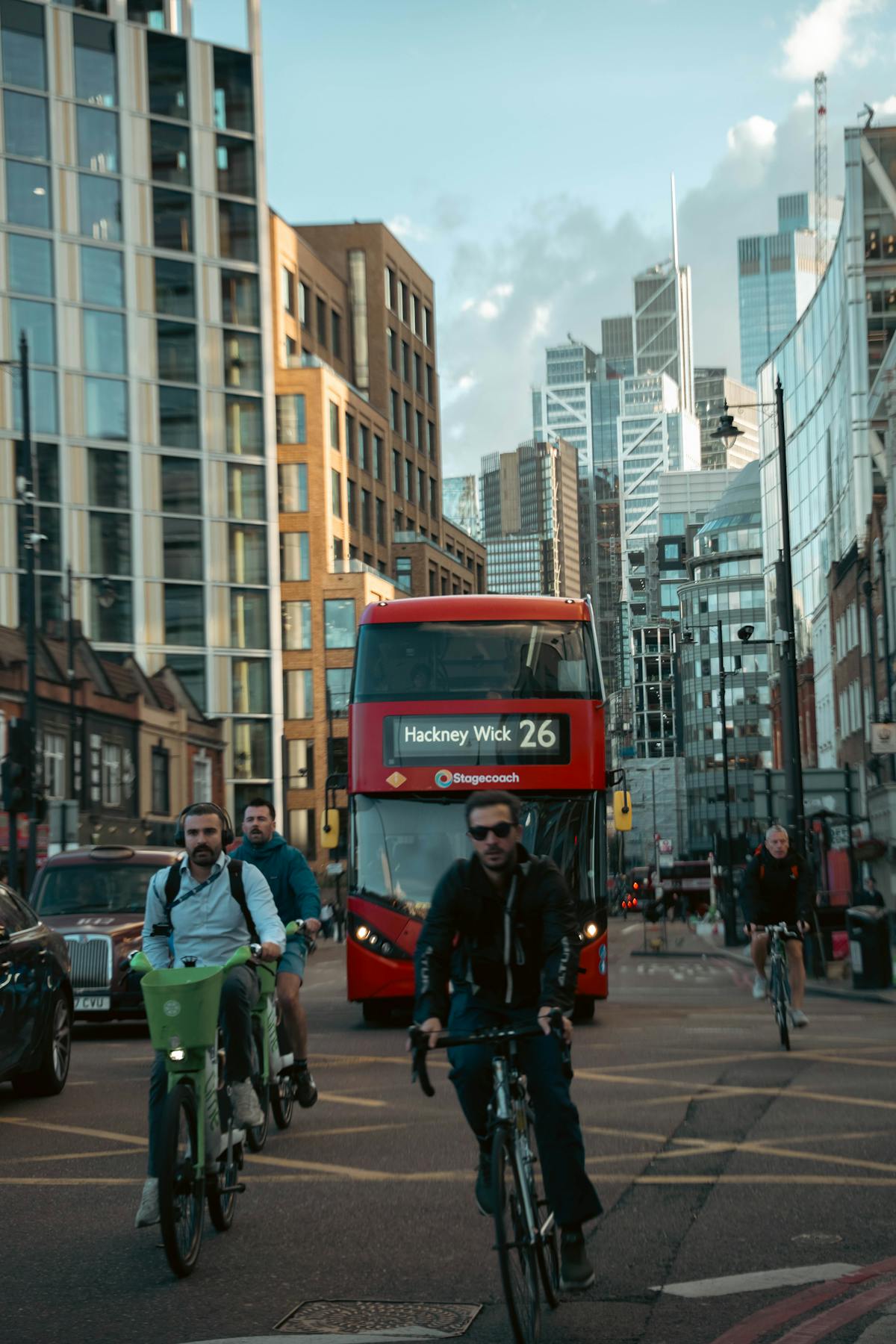
Cycling towards Hackney from the City — the £1.75 fare cap turned the e-bike from a splurge into a genuine bus alternative.
Borough borders have turned into a transport tax
If you want the single best argument for a pan-London framework, it is the "Checkpoint Charlie" problem.
In August 2025, the Guardian described a stretch by Chiswick Bridge where Lime bikes piled up because their motors stopped at a borough boundary, the by-product of Richmond and Hounslow licensing different operators. One commuter described needing two subscriptions to complete a journey, and another resident called the accumulated bikes "a nuisance and an eyesore".
This is the stupid version of the micromobility future: you carry multiple apps, cross invisible lines, and the bike becomes a dead weight because a committee meeting happened in the wrong borough.
Hackney, as a test case, is useful precisely because it shows both outcomes:
- You can make e-bikes broadly affordable with a cap.
- But if each borough makes its own micro-deal, London-wide journeys become fragmented, and the public ends up paying with hassle.
The criticism is not fake, and some of it is fixable
The anti-Lime case has three main strands, and the strongest versions are worth taking seriously.
1 Pavement clutter and accessibility
This is the cleanest criticism, because it impacts people who are not choosing to participate. You can opt out of Lime. You cannot opt out of a bike dumped across a dropped kerb.
In November 2025, Westminster City Council started issuing £100 fixed penalty notices directly to operators for dumped bikes, claiming 150 notices in the first week, and saying totals could reach £1 million a year at that pace.
Whatever you think of fines as policy, this is the direction of travel: councils are moving from "please manage your fleet" to "pay for the externalities".
2 Rider behaviour
There is a recurring complaint that Lime's popularity has put more novice riders onto fast bikes, in normal traffic, without a culture of road positioning or red-light discipline.
There is also a more specific London wrinkle here: per-minute pricing creates time pressure. When the meter is literally running, some riders rush decisions, and red lights are the most obvious casualty. The price model nudges people to treat stopping as "wasting money", which is the opposite of what you want at junctions.
This is real, and it is not unique to Lime. It is what happens when you scale something faster than you scale norms, enforcement, and incentives.
3 The "stolen bike" alarm, and general nuisance
If you have lived near a main road, you have probably heard it.
It is funny because it is true, and because it has that particular London flavour of being mildly tortured by someone else's problem.
Some of this is operational (geofencing, removal speed, parking bay density), and some of it is design (how theft deterrence works, and how loudly it announces itself to everyone else).
The pro-Lime case is stronger than the anti-Lime case
Here is the part that often gets lost: the costs are visible (a bike in the way), but the benefits are often invisible (a car trip that never happened, a missed connection that didn't ruin your evening, a journey that didn't require another crowded platform).
They widen the "useful city"
The Tube makes London feel like a set of corridors. E-bikes make it feel like a surface grid.
That changes behaviour. People take routes they would not take otherwise. They chain errands. They cross parks. They go laterally, not radially. The city becomes less "to Central and back", and more neighbourhood-to-neighbourhood.
If you care about transport as an economic system, that is a productivity gain, because it reduces friction on short trips.
They are a pressure-release valve when the network fails
Those 2025 strike spikes are the obvious examples. But the same logic applies on smaller disruption days. Check the live line status on any weekday morning and you will see why having a plan B matters.
This is where your Tube alerts context matters: the point is not that Lime replaces the Victoria or the Jubilee line. It is that Lime gives you optionality when the Tube becomes unreliable, overcrowded, or simply slower door-to-door.
They can be cheaper than people assume, if you ride like a local
The bundles and the caps are the real story.
If you buy minutes, and you use them on the right journeys, Lime can land in the same broad territory as a couple of Tube hops, particularly for trips that would otherwise require a change or a bus plus a walk.
And Hackney's £1.75 cap is a glimpse of how far this can go if boroughs force affordability.
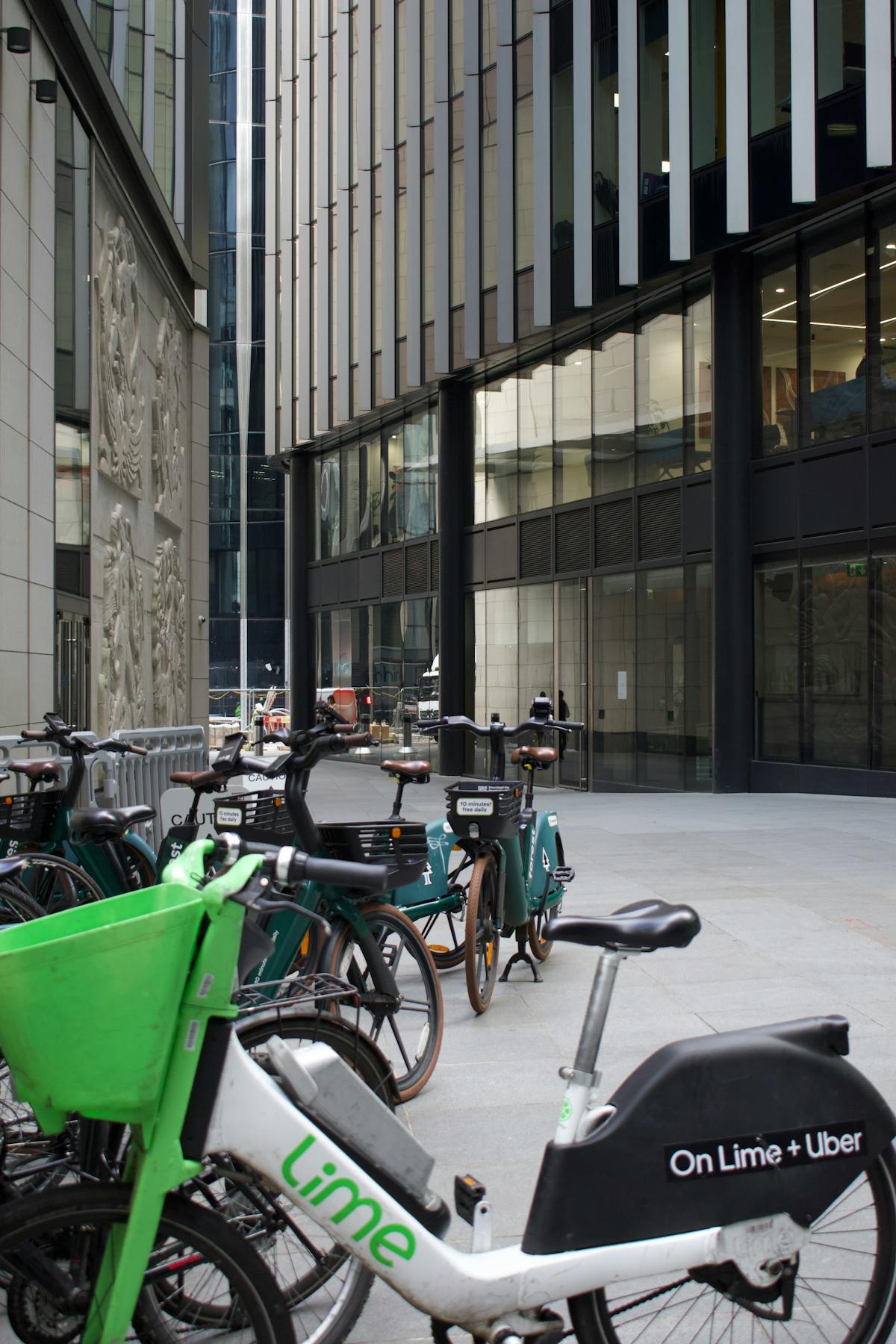
For trips under 5 km, an e-bike is often faster door-to-door than the Tube.
London is not uniquely messy, but it is uniquely fragmented
To understand why London feels especially chaotic, it helps to look at cities where bike-share is more standardised.
Paris
The official Vélib' pricing includes a V-Max subscription at €9.30/month aimed at regular e-bike use. One city, one scheme.
New York City
Citi Bike publishes system-wide pricing changes, including per-minute e-bike fees that shift in predictable steps.
Hackney
The £1.75 fare cap model. Great in-borough, but it stops at the boundary. Cross into Tower Hamlets and you are back on standard rates.
London (overall)
Multiple operators, different pricing, and borough-by-borough permissions that can literally stop your ride mid-bridge.
This fragmentation is not just annoying. It encourages bad behaviour (dumping at borders), and it pushes people into owning multiple apps and subscriptions, which is the opposite of what "public transport" should feel like.
Forest and Voi: the competition that keeps Lime honest
A pro-Lime argument is not a pro-monopoly argument.
Forest, for example, has been shifting towards pricing that nudges behaviour: a £1 unlock fee, with varying free minutes depending on the bike and location. That model can be genuinely cheaper for short commutes if you learn how to "hunt" free-minute bikes, but it can also feel worse if your area suddenly drops from 10 free minutes to 1.
Voi has pushed hard on integration and lower headline rates. One London announcement in July 2025 claimed Voi e-bikes were "free to unlock" and 18p per minute via a specific channel. Meanwhile, Hackney's own equity access scheme states that eligible residents can buy a 30-minute day pass for £1.75.
The point here is not that one operator is morally superior. It is that London works better when there is competition on price, reliability, and operations, and when councils do not accidentally engineer "winner takes borough".
Will Lime survive, or is this another micromobility bubble?
This is one of the best sceptical questions, because the early micromobility era was full of companies that grew fast and collapsed.
Lime's case looks materially stronger than the 2018 hype cycle. In February 2025, Lime announced record results for its most recently disclosed financial year (2024): net revenue of $686m, adjusted EBITDA above $140m, and free cash flow positive for the second consecutive year.
Then in June 2025, Reuters reported Lime had hired Goldman Sachs and JPMorgan to explore an IPO that could happen in 2026, citing those improved financials and sustained free cash flow.
Lime is no longer running purely on vibes. The business is closer to a mature transport operator: capital-intensive, operationally fiddly, regulated, and judged on whether it can keep bikes available and streets passable.
Safety, fires, and the confusing e-bike risk narrative
One nuance worth stating clearly:
A lot of "e-bike fire" risk in London is driven by privately owned or modified e-bikes, often charged indoors with questionable batteries. That is one reason TfL moved to ban most non-folding e-bikes from major parts of its network from March 31, 2025.
Separately, the London Fire Brigade reported 206 e-bike and e-scooter fires in 2025, with 171 involving e-bikes. Those numbers are serious, but they do not map neatly onto "ban hire bikes". They map onto "regulate batteries, stop dodgy conversion kits, and make charging safer".
Shared-bike fleets have their own risks, but they also have professional maintenance and centralised battery management. Lumping everything into one "e-bike danger" bucket tends to produce the wrong policy.
So what should London do (and what should riders do)?
If you want the benefits without the chaos, you need two shifts: governance and etiquette.
Governance: fewer borders, more bays, real enforcement
- A London-wide framework that reduces the "Checkpoint Charlie" effect at borough boundaries.
- More designated parking bays in high-footfall areas, and penalties that push operators to clear hotspots quickly. Westminster's fines are a blunt instrument, but they are a signal that patience has run out.
- Deals like Hackney's should be transparent about incentives (including revenue share), because otherwise people assume the worst, even when the policy goal is affordability.
- A pricing tweak would help too: time-based fares should not make stopping at a red light feel like being punished. A simple fix is a "signal pause" that stops the minute meter when the bike is stationary at junctions for short periods.
Etiquette: treat it like transport, not a disposable object
The social contract piece is boring, but it is the difference between "useful public service" and "green nuisance".
If you finish a ride and leave a bike across a pavement, you are not "slightly inconsiderate". You are imposing a cost on someone who did not choose to participate. And yes, that matters more than your convenience.
The bottom line
- Worth it on passes: LimePass bundles bring per-minute costs down to 9 to 13p, with free unlocks. Pay-as-you-go is a trap.
- Genuinely useful as a Tube backup: When lines like the Northern, Central, or District go down, e-bikes are often faster than the replacement bus.
- Borough fragmentation is the real problem: Not the bikes themselves. London needs a London-wide framework, not 33 separate micro-deals.
- The criticism about clutter and behaviour is valid: Councils are right to fine operators, and riders need to park like they live here.
London should want dockless e-bikes to succeed, because they make the city more resilient, they make short trips less painful, and they give people an option that is faster than a bus and often faster door-to-door than the Tube.
Hackney is the clearest test case so far: cap the price, demand better operations, and suddenly e-bikes look less like a luxury and more like part of the network. For a team building London Underground alerts from Hackney, that is not an abstract policy debate. It is a preview of what "Plan B" can become if London gets the rules right.
And if you are wondering whether the bikes are "worth it", here is the honest answer: yes, if you use passes, choose the right journeys, and park like you live here. The rest is details. The details just happen to be the entire fight.
We're a small team based in Hackney, East London, building highly customisable tube alerts. Choose your lines, set your time window, pick your days, and filter by severity. We will only email you when something actually affects your commute.
Set up a free alert →
Why Is It So Hot on the Tube?
TfL temperature data, the physics of tunnel heat, and what is actually being done about it.
When Will the Tube Be Fully Automated?
Driverless trains, Grades of Automation, platform edge doors, and what TfL documents actually say.
Is the Tube 24 Hours? Night Tube Guide
Which lines run all night, when they operate, and your alternatives when the Tube shuts.
This article is regularly updated as new information becomes available. Send us a tip if you spot something we should include.