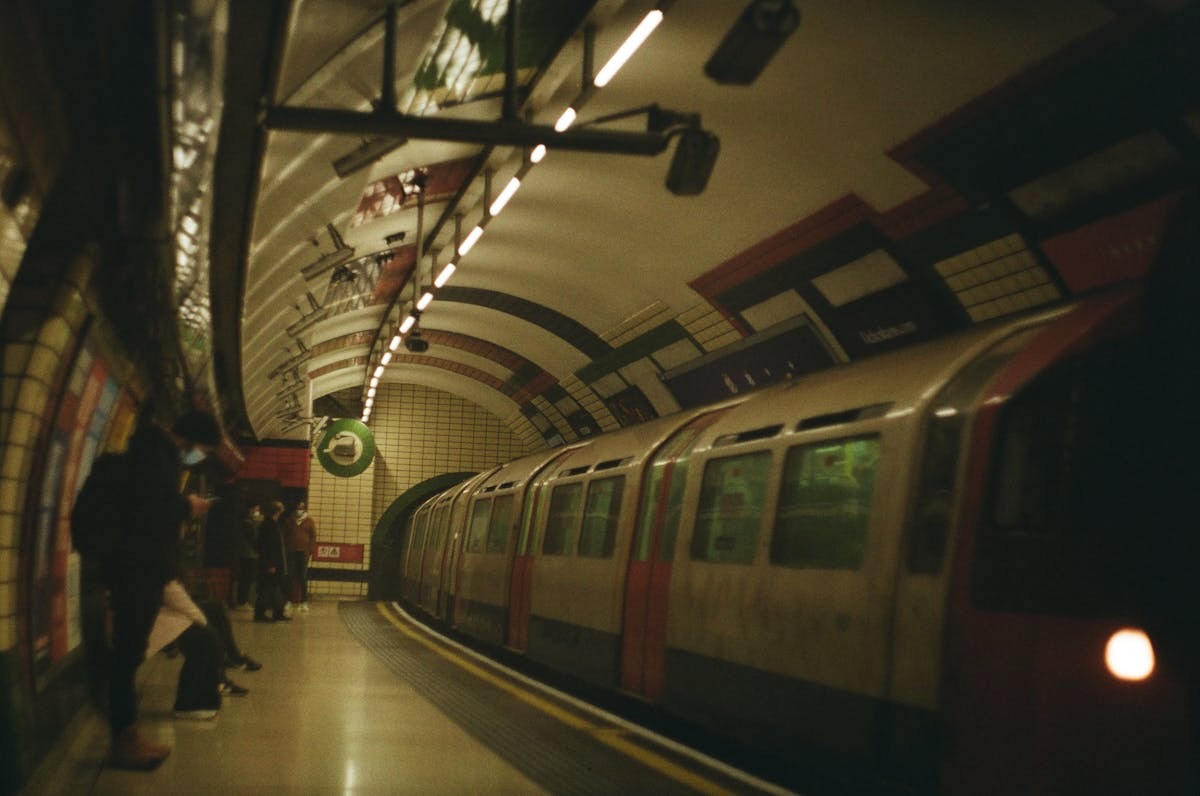
Every weekend, millions of Londoners face the same question: can I get the Tube home after midnight? The answer depends on the day of the week, the line you need, and where you are trying to get to. Most of the network shuts down between roughly midnight and 5am. But since 2016, a handful of lines have stayed open through the night on weekends, and that service has quietly become one of the most useful things TfL runs.
The quick answer
The Underground is not a 24-hour railway. On weekdays and Sundays, the last trains leave central London between roughly 00:00 and 00:30. The first trains start again around 05:00.
On Friday and Saturday nights, five Tube lines run through the night. This is called the Night Tube. A section of the London Overground also runs overnight on the same nights.
Everything else - the District, Circle, Hammersmith & City, Metropolitan, Bakerloo, Waterloo & City, Elizabeth line, and DLR - shuts for the night, every night.
Which lines run all night?
The Night Tube operates on five Underground lines, plus one Overground route. Here is what runs, where, and how often.
| Line | Night Tube coverage | Typical frequency |
|---|---|---|
| Central | Most of the main line (some outer branches excluded) | Every 10 mins |
| Jubilee | Entire line (Stanmore to Stratford) | Every 10 mins |
| Northern | Charing Cross branch only (not the Bank branch) | Every 8–12 mins |
| Piccadilly | Cockfosters to Heathrow Terminal 5 | Every 10–15 mins |
| Victoria | Entire line (Walthamstow to Brixton) | Every 10 mins |
| Overground (Mildmay) | Highbury & Islington to New Cross Gate | Every 15 mins |
Frequencies are approximate. TfL sometimes adjusts them for engineering work or special events. The Night Tube does not usually run on bank holiday weekends or during planned closures, so always check before travelling.
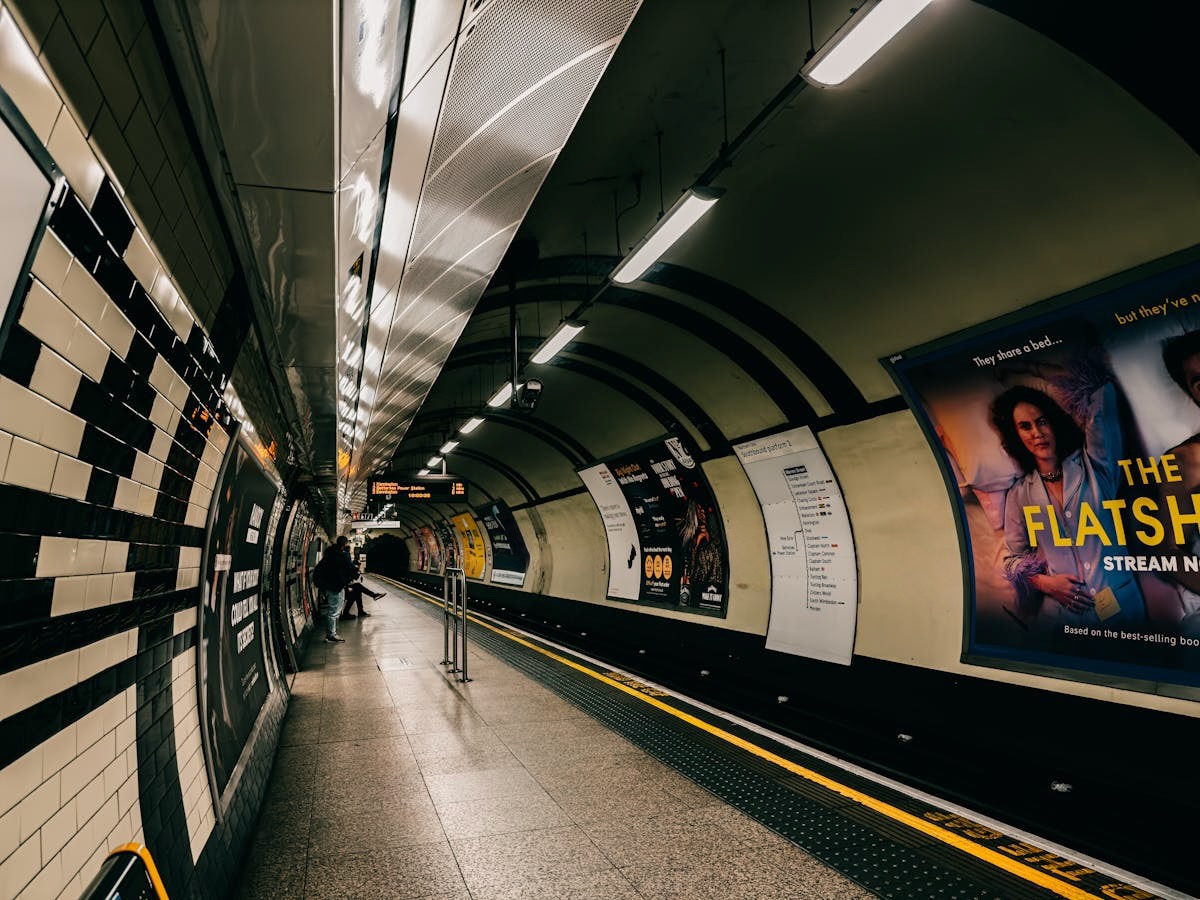
Night Tube services run from around 00:30 to 05:00 on Friday and Saturday nights. Photo: Pexels.
What the Night Tube actually looks like
If you have never used it, Night Tube is simpler than it sounds. The same trains run on the same tracks. The main differences are frequency (roughly every 10 minutes instead of every 2–3 during the day) and atmosphere (quieter carriages, a mix of late-night workers and people heading home from a night out).
Stations on Night Tube lines stay open and staffed. You can use Oyster, contactless, and Travelcards exactly as you would during the day. The off-peak fare cap applies, which means late-night travel is usually cheaper than peak hours.
If you are heading to or from Heathrow, the Piccadilly line Night Tube runs all the way to Terminal 5. It is often the cheapest way to catch an early morning flight or get home from a late arrival - far cheaper than a taxi or a night bus followed by a connection.
The Northern line catch: only one branch
This is the detail that catches people out. The Northern line has two branches through central London: the Charing Cross branch (via Tottenham Court Road, Leicester Square, Charing Cross, and Waterloo) and the Bank branch (via Bank, London Bridge, and Borough).
Only the Charing Cross branch runs overnight. If you need a station on the Bank branch - Borough, Elephant & Castle (Northern line platforms), or London Bridge (Northern line) - you will need to find an alternative. The Jubilee line Night Tube covers London Bridge and Waterloo, so that can fill part of the gap.
The Overground night service
Since its introduction, a section of the London Overground has joined the Night Tube on Friday and Saturday nights. The route runs between Highbury & Islington and New Cross Gate, serving stations through Dalston, Shoreditch High Street, Whitechapel, and Canada Water.
Trains run every 15 minutes, which is less frequent than the Night Tube lines, but enough to make it a reliable option. The key interchange is Canada Water, where you can connect to the Jubilee line Night Tube for onward travel east or west.
The Overground night service is popular with people travelling through East London, particularly to and from Shoreditch, Dalston, and Peckham. It is also the only rail option overnight for stations between Highbury & Islington and Surrey Quays that are not served by Night Tube lines.
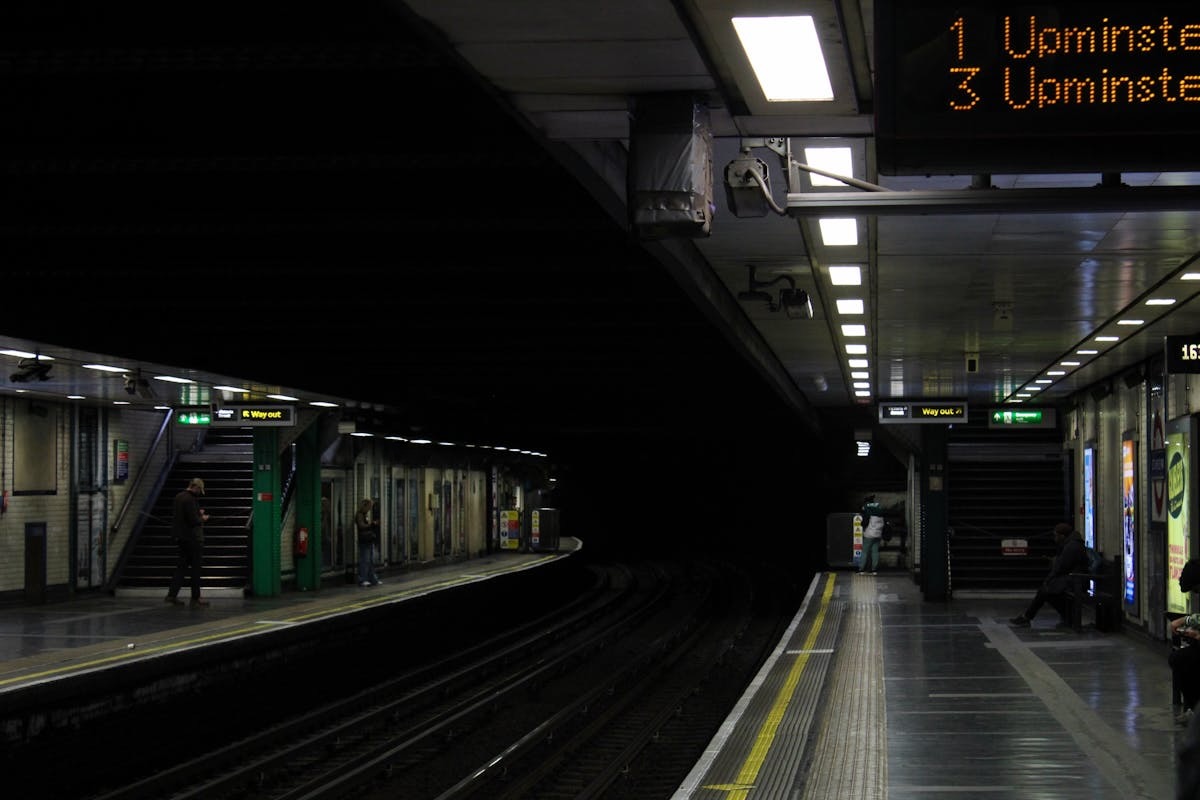
The Overground's East London night service connects Highbury & Islington to New Cross Gate every 15 minutes. Photo: Pexels.
Why the rest of the network shuts overnight
The obvious question is: if five lines can run all night, why not all of them?
The answer is maintenance. The London Underground is one of the oldest metro systems in the world, and much of its infrastructure - track, tunnels, signalling, escalators, ventilation - requires regular overnight access for inspection, repair, and renewal.
The Night Tube lines were chosen partly because their maintenance schedules could be reorganised to create enough overnight running time without compromising safety or reliability. For other lines, particularly the sub-surface network (Circle, District, Hammersmith & City, Metropolitan), the engineering access requirements are more intensive.
Staff costs also play a role. Running night services requires drivers, station staff, control room operators, and maintenance teams. TfL has to balance the cost of providing the service against the revenue it generates and the wider benefits to the city.
A brief history of Night Tube
The Night Tube was first announced in 2014 as part of a broader push to make London a genuine 24-hour city. The original launch date was September 2015, but industrial disputes over pay and conditions for night shifts delayed it repeatedly.
Services finally started in August 2016, initially on the Central and Victoria lines. The Jubilee, Northern, and Piccadilly lines followed within weeks.
The service was suspended in March 2020 during the pandemic and did not resume until November 2021 (on the Central and Victoria lines) and May 2022 for all five lines. Since then, it has run consistently on Friday and Saturday nights, with occasional closures for engineering work or industrial action.
What about other cities?
London's Night Tube is sometimes compared unfavourably to cities with full 24-hour metro systems. The comparison is not always fair, because the constraints differ enormously.
New York
The only major metro that runs 24/7 on most lines. Made possible partly by four-track sections that allow maintenance on two tracks while trains run on the other two.
Berlin
U-Bahn and S-Bahn run all night on weekends, similar to London. On weekdays, night buses replace trains. A close parallel to the Night Tube model.
Paris
The Métro shuts nightly (last trains around 01:00 at weekends). Noctilien night buses fill the gap. No regular all-night metro service despite the network's size.
Copenhagen
The driverless Metro runs 24/7, but it is a much smaller, newer system designed for automation from the start. Not directly comparable to a legacy network like London's.
The key takeaway is that London's weekend Night Tube sits in the middle of the pack globally. It is more generous than Paris or Tokyo, roughly comparable to Berlin, and well short of New York's round-the-clock operation.
Alternatives when the Tube is shut
On nights when there is no Night Tube (Sunday to Thursday), or if you need a line that does not run overnight, you still have options:
- Night buses: London has an extensive night bus network, with routes prefixed "N". Many mirror Tube routes and run every 15–30 minutes. The N29, N73, and N207 are among the busiest.
- Regular buses: Some daytime bus routes run 24 hours (without the "N" prefix). The 25, 53, 149, 176, and 243 are examples.
- Taxis and ride-hailing: Always available, but expensive. Surge pricing can make late-night journeys surprisingly costly.
- Cycling: Santander Cycles are available around the clock. Many cycle hire apps operate overnight too.
- Walking: Central London is more compact than people think. Oxford Circus to King's Cross is about 25 minutes on foot.
Tips for using the Night Tube
A few practical things worth knowing:
- Check before you travel. Night Tube can be suspended for planned engineering work. TfL's website and the network dashboard show current status.
- The last "normal" train is not the last train. On Night Tube lines, services transition seamlessly from the regular timetable into the overnight frequency. There is no gap.
- Interchanges can be tricky. If your journey requires changing between a Night Tube line and a non-Night-Tube line, the connection only works if both lines are running. Plan your route using a single Night Tube line where possible.
- It is usually quiet. Night Tube trains are rarely crowded, except perhaps around midnight as pubs and clubs close and around 03:00–04:00 as some venues finish.
- Off-peak fares apply. Night Tube travel is charged at off-peak rates, and daily and weekly caps still apply. Travelling at 03:00 costs the same as travelling at 15:00.
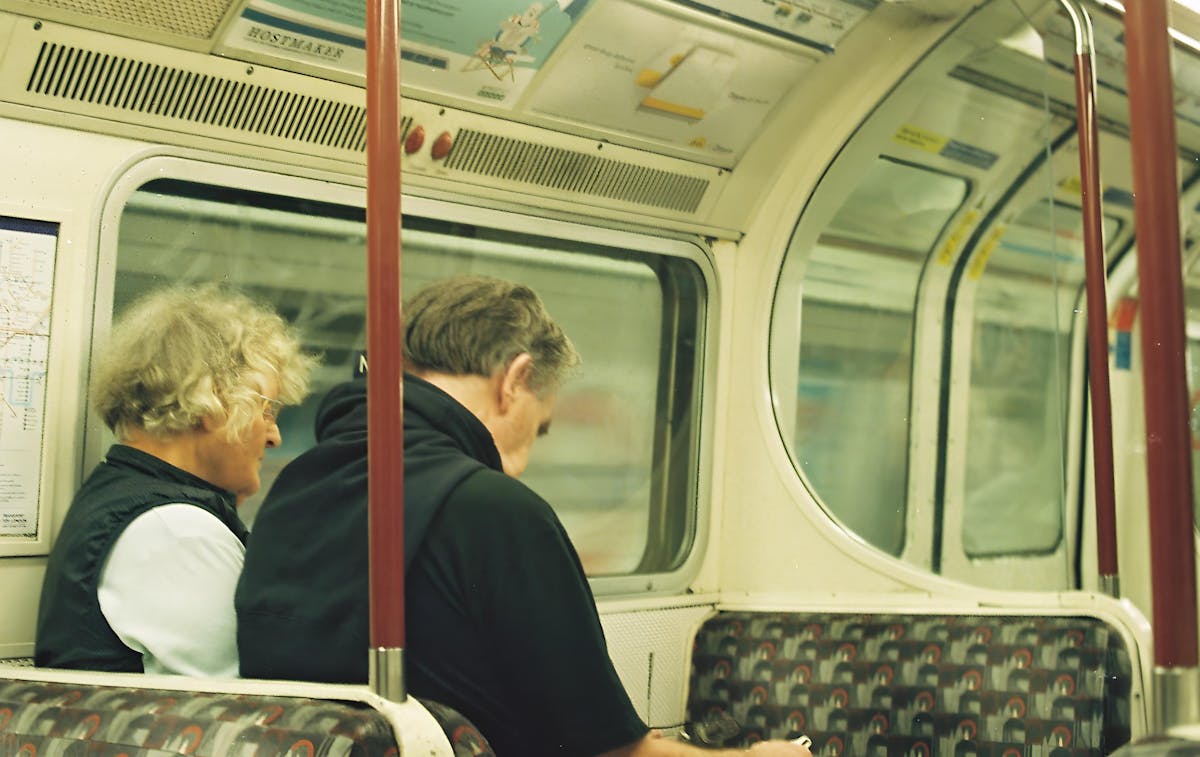
Night Tube carriages are typically quiet, with seats almost always available. Photo: Pexels.
Could the Night Tube expand?
TfL has not announced plans to add more lines to the Night Tube. The five current lines were chosen because they serve the busiest corridors and their infrastructure could accommodate the changed maintenance patterns.
The most commonly requested additions are the District line (for South West London) and the Elizabeth line (for connections to Heathrow's other terminals and stations across West and East London). Neither is on a published roadmap.
Any expansion would need to solve the same set of problems: reorganising maintenance schedules, negotiating staffing arrangements, and ensuring the business case stacks up. TfL's financial position since the pandemic has made large-scale service expansions harder to justify, even popular ones.
- Not 24 hours: The Tube runs roughly 05:00 to 00:30 on most days.
- Night Tube: Five lines (Central, Jubilee, Northern, Piccadilly, Victoria) run all night on Friday and Saturday.
- Overground too: Highbury & Islington to New Cross Gate runs overnight on the same nights.
- Maintenance is the constraint: The network is too old and too busy to run everything all night without compromising safety.
- Alternatives exist: Night buses, taxis, cycling, and walking cover the gaps on other nights.
We're a small team based in Hackney, East London, building highly customisable tube alerts. Choose your lines, set your time window, pick your days, and filter by severity - we'll only email you when something actually affects your commute.
Set up a free alert →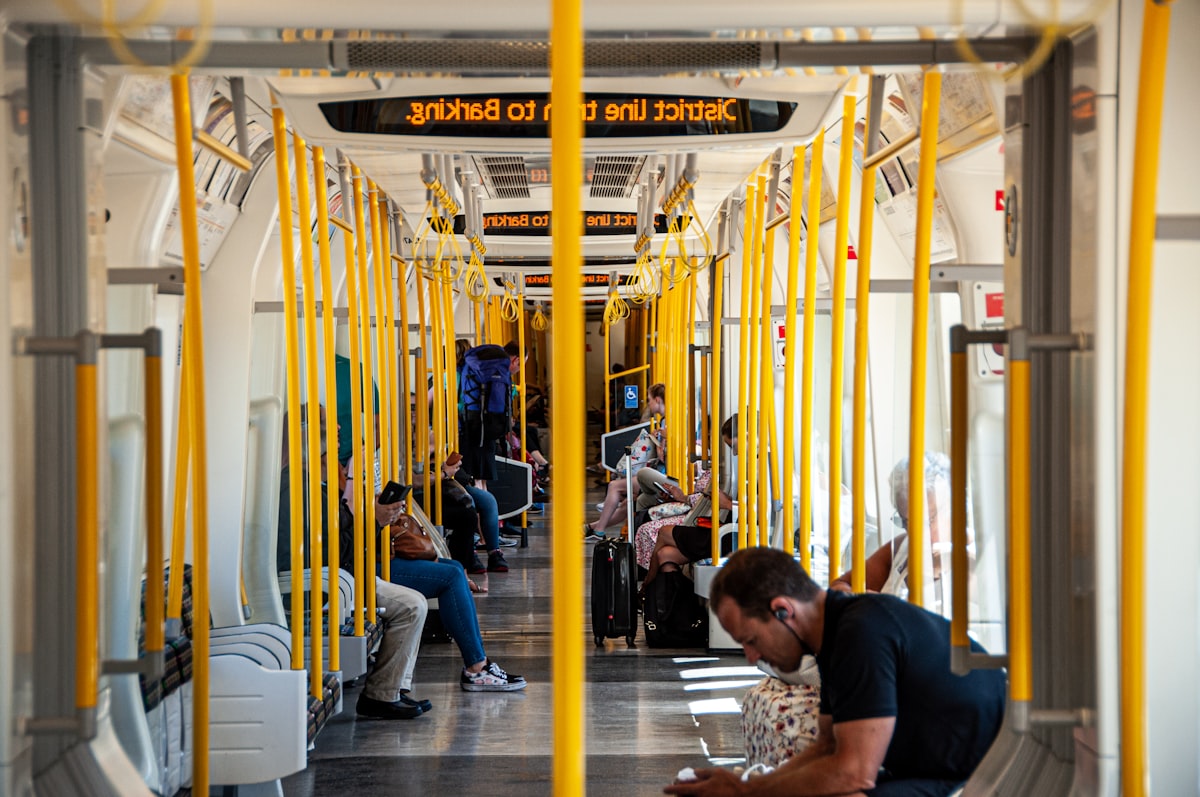
Why Is It So Hot on the Tube?
TfL temperature data, the physics of tunnel heat, and what is actually being done about it.
When Will the Tube Be Fully Automated?
Driverless trains, Grades of Automation, platform edge doors, and what TfL documents actually say.
Tube Fares in 2026
Full fare tables, caps, discounts, pink readers, and the tapping mistakes that cost you money.
This guide is regularly updated as services change. Send us a tip if you spot something we should include.